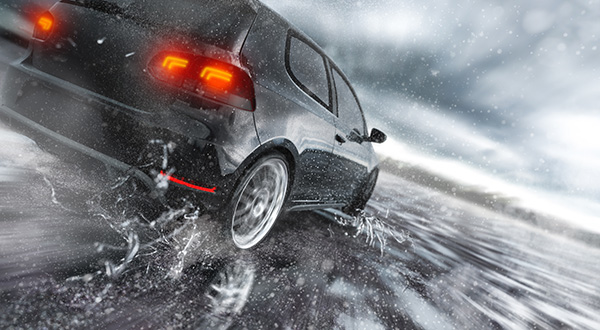
Rain changes the way a car feels faster than almost anything else. A vehicle that seems perfectly fine on dry pavement can suddenly feel loose, nervous, or harder to trust once the road gets wet. That gets blamed solely on the weather, but in many cases, the car is already telling you something about its condition.
Sometimes new tires will help a lot. Sometimes they are only part of the answer.
Why Rain Changes The Way A Car Feels
Wet roads reduce traction, plain and simple. The tires have less grip to work with, braking distances get longer, and any weakness in the steering or suspension becomes much easier to feel. What seemed like a small issue in dry weather can become a much bigger confidence problem in the rain.
That is why a car can feel unstable only when the pavement is wet. The road is asking more from the tires, alignment, shocks, and steering than it does on a clear day. If one part of that system is already slipping, rain exposes it quickly.
When New Tires Really Can Fix The Problem
Tires are often the biggest part of the story. If the tread is worn down, the tire cannot move water away effectively, and that makes hydroplaning and loss of grip much more likely. Even before the tire is completely worn out, wet-weather performance can drop off enough that the car feels less planted than it used to.
Tire type matters too. A cheap tire or the wrong tire for the way the car is driven may feel acceptable in dry weather, but disappoint badly in the rain. New tires can absolutely make a major difference if the old ones are low on tread, hardened with age, or simply not very good in wet conditions.
When New Tires Will Not Solve Everything
This is the part drivers miss. A car that feels unstable in the rain is not always dealing with a tire problem alone. Worn shocks, weak struts, loose steering parts, poor alignment, or even brake issues can all make the vehicle feel less controlled when the road is wet.
If the car bounces too much, wanders, or reacts strangely to puddles, new tires may help, but not fully solve it. The same goes for a vehicle with uneven tire wear. If the alignment or suspension caused that wear pattern in the first place, the new set will start wearing badly too unless the real cause is corrected.
Signs The Problem Is Bigger Than Tread
A few patterns usually point toward more than just worn tires:
- The car pulls or wanders even on damp roads
- The steering feels loose or slow to respond
- The vehicle bounces too much after dips or bumps
- One tire shows more wear than the others
- The car feels nervous during braking in the rain
These clues are important because they point toward suspension, alignment, or steering issues that wet weather is making easier to feel. In that situation, tires are still important, but they are not the only issue.
Why Suspension And Alignment Are So Important
A car feels stable in wet weather when the tires stay planted, and the steering responds cleanly. Worn shocks and struts let the body move too much, which makes it harder for the tires to maintain steady contact with the road. Poor alignment alters how the tires meet the pavement, which can make the vehicle feel like it wants to drift or hunt through standing water.
This is where regular maintenance really pays off. Tires, alignment, and suspension wear affect each other. If one part is off, the rest of the system starts feeling worse, especially in bad weather.
What Hydroplaning Really Tells You
Hydroplaning gets blamed on heavy rain, but it is often the combination of rain and worn tires that makes it much worse. Good tread gives water somewhere to go. Worn tread gives it much less room, which means the tire starts riding on top of the water instead of cutting through it.
That is why new tires can be such a big improvement when hydroplaning is part of the complaint. Still, if the car also feels loose between puddles, unstable during lane changes, or vague in the steering, there is probably more going on than tread depth alone.
What A Proper Wet-Weather Inspection Should Cover
A good inspection should look at tread depth, tire age, tire type, air pressure, wear patterns, alignment angles, shock and strut condition, and front-end play. The goal is to figure out whether the instability is mainly tire-related or whether the tires are reacting to a bigger issue underneath the car.
That matters because wet-weather stability is not something you want to guess at. A car that feels uncertain in the rain is harder to control when you need it most, and that is exactly when the right fix matters.
Get Tire And Suspension Service In Liberty, TX, With Hometown Tire and Auto
If your car feels unstable in the rain, Hometown Tire and Auto in Liberty, TX, can check the tires, suspension, and alignment to determine whether new tires will solve the problem or whether something else needs attention.
Bring it in before the next storm makes that loose, uneasy feeling harder to ignore.