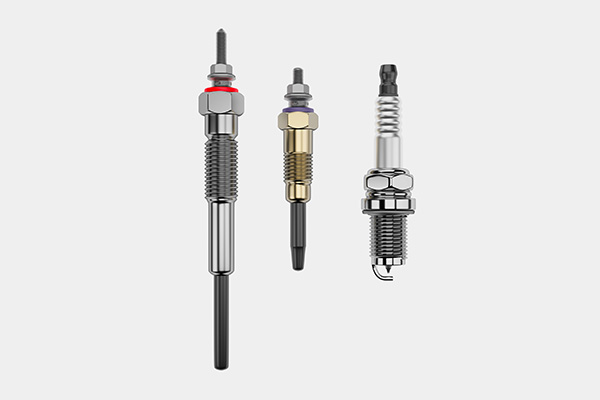
Gasoline and diesel engines burn fuel in very different ways, which is why they use different plugs. Spark plugs make a timed spark to ignite a fuel and air mix in gas engines. Glow plugs warm the diesel combustion chamber so compressed air is hot enough to ignite injected fuel cleanly, especially on cold starts.
Understanding how each works helps you spot issues early and choose the right service.
Spark Plugs: Timed Ignition for Gas Engines
A spark plug sits in the cylinder head and fires an electrical arc across its electrodes at just the right moment. The ignition coil charges, the plug sparks, and the air-fuel mixture burns from that point outward. Heat range, electrode design, and gap size are matched to the engine so the plug stays clean and the spark is strong at idle and under load. When plugs wear or foul, the arc weakens, misfires increase, and fuel economy drops.
Glow Plugs: Preheating for Diesel Combustion
Diesels ignite fuel by compression heat rather than a spark. A glow plug is a small electric heater that gets red hot at its tip to warm the air, injector tip, and chamber walls. That preheat shortens cranking time, reduces smoke, and smooths cold starts. Many systems also keep the plugs warm for a short period after startup to stabilize combustion and lower emissions. When glow plugs age or a control module fails, cold starts become long and uneven.
Key Differences at a Glance
- Purpose: Spark plugs ignite every power stroke in gas engines; glow plugs preheat for easier diesel ignition, mostly during cold starts.
- When they work: Spark plugs fire continuously while running; glow plugs operate before and briefly after startup.
- Failure effect: Bad spark plugs cause ongoing misfires, rough running, and potential catalytic converter damage. Weak glow plugs cause hard cold starts, white smoke, and rough idle that improves as the engine warms.
- Service trigger: Spark plugs are mileage and time items; glow plugs are often replaced as a set when testing shows high resistance or slow heating.
Symptoms When Something Is Not Working
Gas engines with tired plugs or coils may hesitate under load, shake at idle, or flash a check engine light. You might smell fuel after repeated misfires and see poor fuel economy. Diesels with weak glow plugs crank longer on cold mornings, puff white or gray smoke at startup, and idle roughly for the first minute. A glow plug indicator that stays on or a code for the glow circuit is a common clue.
Service Intervals, Parts Quality, and Why Spec Matters
Spark plug life varies widely. Basic copper plugs may be due around 30,000 miles, while fine-wire iridium or platinum designs often run much longer. Replacing on time protects ignition coils and keeps the catalytic converter safe from raw fuel during misfires.
For diesels, glow plugs are not always listed with a strict mileage interval, but testing during routine service catches slow heaters before winter arrives. Using the exact heat range and approved designs is important. The wrong spark plug can overheat, and the wrong glow plug can expand or fail early.
Our technicians install parts to the manufacturer’s specification and document plug types on the invoice so your records are airtight.
What To Know Before You Schedule
If the check engine light appears, a simple code reader can tell you whether a single gas cylinder is misfiring. Note whether roughness happens only on hills or also at idle. Inspect coil boots for cracks and look for oil in the plug wells, which points to a valve-cover seal issue.
For diesels, watch the glow-plug icon, listen for the relay click, and make sure the battery is strong; low voltage slows glow times and makes a healthy engine feel weak on cold starts.
How Professionals Diagnose Without Guesswork
Real diagnostics rely on measurements and cause-and-effect tests, not parts swapping. Here is how a technician proves the fault before recommending a repair:
- Start with data, not hunches: Review misfire counters, fuel trims, and freeze-frame data to see when and how the issue appears.
- Inspect ignition on gas engines: Pull spark plugs to check deposits and gap, then verify coil command and dwell under load.
- Coil swap confirmation: Move the suspect coil to another cylinder. If the misfire follows, the coil is the culprit; if it stays, look at the plug, injector, or compression on that cylinder.
- Diesel glow system checks: Measure glow plug resistance, confirm current draw on each circuit, and test the control module outputs.
- Rule out slow cranking: If cold starts are still poor with good glow performance, measure cranking RPM. A slow starter can mimic a glow fault.
- Injector and balance testing: Check injector balance rates and contribution at idle and during a brief snap test to spot a weak cylinder.
- Only replace what proves bad: Use results from these steps to target the actual failed part, not everything in the system.
Habits That Protect Ignition and Fuel Preheating
Use the specified spark plug type and gap, and replace coil boots when they get brittle to prevent moisture tracking. Keep air filters fresh so mixtures do not run overly rich and foul plugs.
For diesels, let the glow cycle finish on very cold mornings before cranking, and keep the battery and cable ends clean and tight. A strong battery shortens glow time, lowers starter strain, and reduces smoke.
Get Spark Plug and Glow Plug Service in Liberty, TX with Hometown Tire and Auto
Ready for smoother starts and a steady idle? Visit Hometown Tire and Auto in Liberty, TX. Our team tests coils, plugs, and glow circuits, verifies battery health, and installs the correct specification parts so your engine starts cleanly and runs strong.
Book a visit today and keep the ignition performance right where it should be.