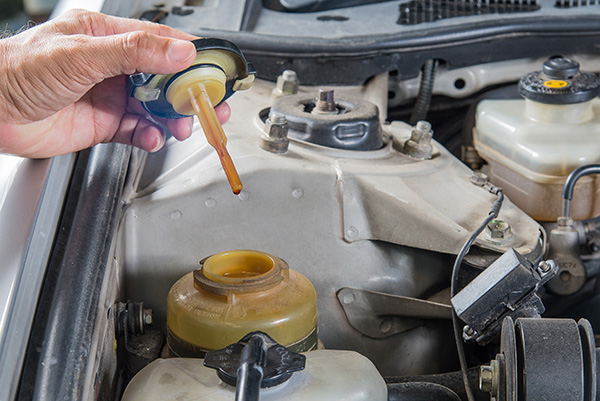
Seeing a fresh spot under the front of your car can ruin your whole morning. You might not even notice anything wrong while driving at first, which makes it more confusing. Then the steering starts to feel heavier in parking lots, or you hear a faint whine when turning, and suddenly that little spot feels like a bigger deal.
Power steering leaks are common, and most of them come from a few predictable places. The key is identifying where the fluid is coming from and fixing it before the system runs low and starts damaging parts that cost a lot more than the fluid itself.
Where Do Power Steering Fluid Leaks Show Up
Power steering components live up front, near the engine and front suspension. The pump, hoses, and steering rack are all in the area where leaks can drip straight down. Airflow while driving can also push fluid back along the underside, so the drip spot does not always line up perfectly with the source.
Once power steering fluid leaks, it spreads easily. It can coat the splash shield, run down suspension parts, and collect grime that makes everything look wet. That is why the first step is usually cleaning and tracing, not assuming the first wet spot is the origin.
The Most Common Leak Point: Hoses And Crimped Connections
Power steering hoses handle heat, vibration, and pressure. Over time, the rubber sections can soften and crack. The crimped fittings at the ends can also start to seep, especially on the high-pressure side.
The high-pressure hose is under the most stress. If it leaks, it can drip quickly and leave a noticeable puddle. The return hose runs at lower pressure, but it can still leak as it ages. Return hose leaks often appear as slow seepage that worsens over time.
If you notice wetness around a hose fitting or see fluid on the frame or splash shield near the front, hoses and connections are one of the first areas to inspect.
Power Steering Pump Leaks And What They Look Like
A leaking pump often leaves fluid around the pump housing or near the pulley area. Some leaks come from a front seal behind the pulley. Others come from a gasket or fitting on the pump body.
If fluid gets flung by the pulley, it can spray around the engine bay and make the leak look worse than it is. You might also hear pump noise when turning, especially if the fluid level has dropped and air is being pulled into the system.
A pump leak does not always mean the pump has failed internally, but it does mean the system is losing fluid and needs attention.
Steering Rack Leaks That Hide Until They Get Bad
The steering rack has seals at each end where the tie rods connect. When those seals wear, fluid can leak into the rack boots. At first, you may not see a drip. The boot can hold fluid like a little reservoir.
Eventually the boot fills enough that fluid starts leaking out. At that point, the underside near the inner tie rod area may look wet. If one boot looks swollen or wet compared to the other, that can be a clue that the rack is leaking internally.
Rack leaks are more serious because replacing rack seals alone is not always practical. Many vehicles require replacing the rack assembly to solve the leak correctly.
Reservoir, Cap, And Return Line Seepage
Some power steering reservoirs develop cracks with age, especially if they sit near engine heat. A cap seal can also harden and allow seepage. These leaks may look like wetness around the reservoir rather than a puddle on the ground at first.
A return line clamp that is weak can also allow seepage. These are sometimes the easiest leaks to repair, but they can still lead to low fluid if ignored. Small leaks have a tendency to get bigger as rubber and seals age.
How Driving Symptoms Connect To Leak Severity
A small leak can exist with no noticeable steering change. Once the fluid drops enough, symptoms begin.
Common signs include a whining noise when turning, steering that feels heavier at low speeds, and a jerky feel in the wheel during parking maneuvers. If the steering suddenly gets much heavier or the noise becomes loud, the system may be very low.
It is not smart to keep driving with a low fluid level. The pump relies on fluid for lubrication. Running low can overheat it and damage internal components. That is how a leak turns into a pump replacement on top of the leak repair.
Get Power Steering Leak Repair in Liberty, TX, with Hometown Tire and Auto
We can inspect your power steering pump, hoses, reservoir, and steering rack to pinpoint exactly where the leak is coming from. We’ll fix the source of the leak, refill with the correct fluid, and verify proper steering assist so you can drive confidently again.
Call Hometown Tire and Auto in Liberty, TX, to schedule service and stop that power steering fluid leak before it leads to bigger problems.